- Book Report: Our Wives Under the Sea, by Julia Armfield
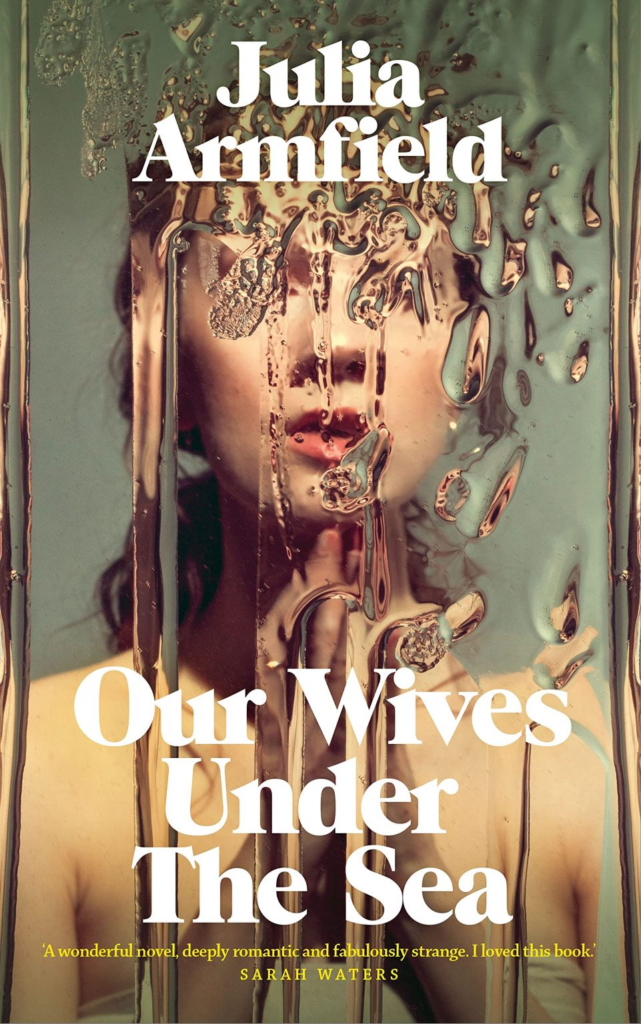
This is beautiful, in that it’s beautifully written.
In alternating first-person chapters, we follow a contemporary couple, Miri and Leah, who have undergone a catastrophe. Miri’s chapters are in the now, the aftermath, and Leah’s are in the when, the disaster itself. After crewing a deep-sea research vessel that became stranded in the Mariana trench for several months, she’s returned with severe nerve and tissue damage from prolonged compression.
But although Leah has made it back, their relationship has largely broken down. We see this only though Miri’s eyes, as all Leah’s chapters are in the past. The implicit question – every book should have at least one – is, will they sort out their differences? With a side order of, will Leah recover from her illness?
What this book has in spades is human observation, particularly in Miri’s chapters, as she tries to carry on normal life with her limited friend set and irritating neighbours. In many ways it’s the realness of these that pulls you along, that grounds you within the world. Our wives under the sea is, more than anything else, a mood piece, designed to walk you through a series of emotions.
It also manages that trick that Jules Verne failed, of giving you lots of marine information disguised as dialogue and documentaries. The colour of octopus blood. The proportion of Earth life in the sea. There are analogies to be had too; Miri joins a website for wives cosplaying that their husbands are lost in space. Later, more accepting of her situation, she joins a different one for people whose partners are really missing.
I picked this one up because I’m in the middle of querying, and it was mentioned by more than one agent that I’m interested in. It’s good to see where the bar is, although the genre here is wildly different. And I think my greatest impression is this; that this is a book that centre-stages its themes rather than either its characters or its plot. It’s a meditation on relationship breakdown and renewal, and of moving on.
From here on is spoilers; There is still time for you to surface before you encounter them.
And the spoiler is … that there is no spoiler! The book gently winds itself from here to there, and there is where you knew it was going anyway. Our Wives Under the Sea is billed as a horror, which takes away any surprise that you might experience when, at the halfway point, Leah’s bodily degeneration proves to be not just decompression sickness. Honestly that’s a relief, rather than a shock. There’s the obligatory amoral corporation of scientists too curious for their own good, and an ancient intelligence in the deeps that they should not have disturbed, but these are sketched lightly in the background.
I really like another character we’re introduced to right at the end, Juna, who’s sister died in the expedition. While Mira has been largely passive, Juna has been actively searching for answers. I find myself thinking about her a lot, and imagining what it would be like if Armfield wrote her story too. I’d be all over that.
Overall a contemplative, reflective book about changing relationships, disguised as a book about mild body horror.